UKDW and UNDHIRA Host Summer Camp: Students from Four Countries Explore Visual Ethnography


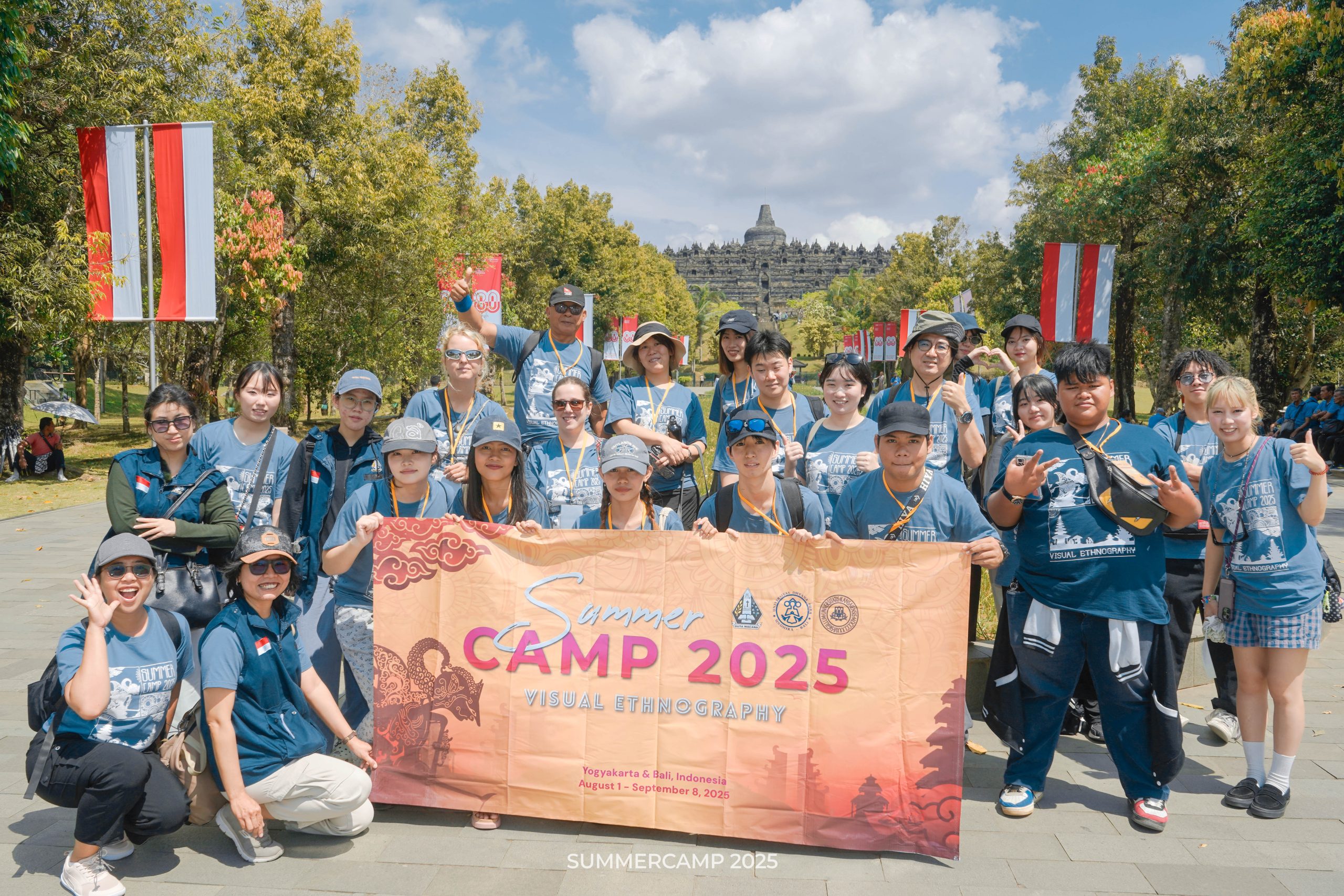
Universitas Kristen Duta Wacana (UKDW) Yogyakarta, in collaboration with Universitas Dhyana Pura (UNDHIRA) Bali, once again offered an enriching cross-cultural and interdisciplinary learning experience through the 2025 Summer Camp “Visual Ethnography”, held from August 1 to September 8, 2025.
Adopting a blended learning format, the program brought together 17 students from four countries—Indonesia, Japan, Italy, and Uruguay—representing a wide range of academic and cultural backgrounds. Participants engaged in online lectures, on-site fieldwork in Yogyakarta and Bali, focus group discussions, and final project presentations.
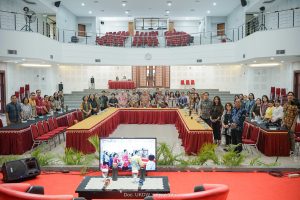
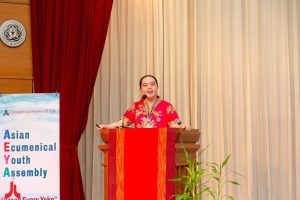
In her opening remarks, UKDW Rector Dr.-Ing. Wiyatiningsih stressed that the program went beyond classroom learning. “This is a space of intercultural encounters—where nations and cultures meet, collaborate, and learn from one another. Participants come together to grow and explore culture in a dynamic and personal way,” she said.
She also thanked UKDW’s partners and organizing team for making the summer camp possible through strong institutional collaboration. “To all participants, may this program be a space to learn, to connect, and to inspire one another,” she added.
Dr. phil. Lucia Dwi Krisnawati, Head of UKDW’s Office of Partnerships and Public Relations, explained that the program was designed with an interdisciplinary approach to prepare students for global challenges in the digital era. Visual ethnography, she noted, was chosen as the theme because it resonates with the ways younger generations—especially Gen Z—engage with images, video, and digital storytelling.
Visual ethnography is a research method that blends theory and practice, using visual media to understand and communicate cultural insights. Through this approach, students exchanged perspectives on traditions and ways of life in Java and Bali, while also exploring applications in product design, journalism, and social media.
“This program is not just about visiting new places, taking photos, or recording videos,” Dr. Lucia emphasized. “It’s about learning to see people and cultures differently, telling stories through the lens of a camera—with respect, curiosity, and deeper understanding. Participants were grouped and assigned projects related to Javanese and Balinese culture, local wisdom-based farming, community-based eco-tourism, and personal and spiritual well-being.”
Working under faculty guidance, students were free to shape their own projects. The program also carried academic weight, convertible into 2–3 university credits, and could be transferred toward community service (KKN) or a Cultural Appreciation course.
Participants experienced the summer camp as a journey of growth and discovery. Paola from Uruguay reflected, “When I saw this program, I thought it would be a great opportunity to study at another university, on another continent, and gain insight into perspectives from this region of the world. It also helps me keep improving my knowledge of ethnographic techniques for my future academic plans.”
Nicole from Italy shared a similar excitement about cultural immersion. “Today we visited museums, the Yogyakarta Sultan Palace, and Kampung Purbayan. We learned about Javanese culture, saw how the community leads tourism here and how the community bonded with each other. It was such an interesting day—we tasted local food, talked with many people, and I learned a lot!”
The 2025 Summer Camp “Visual Ethnography” showed that international learning can move beyond traditional academic settings. By blending ethnographic methods, cross-country collaboration, and interdisciplinary approaches, the program created a unique space for young people to grow as global learners—reflective, empathetic, and adaptable in an interconnected world. [drr]