UKDW Morning Prayer Reflects on Palm Sunday and the Call to Humble Leadership
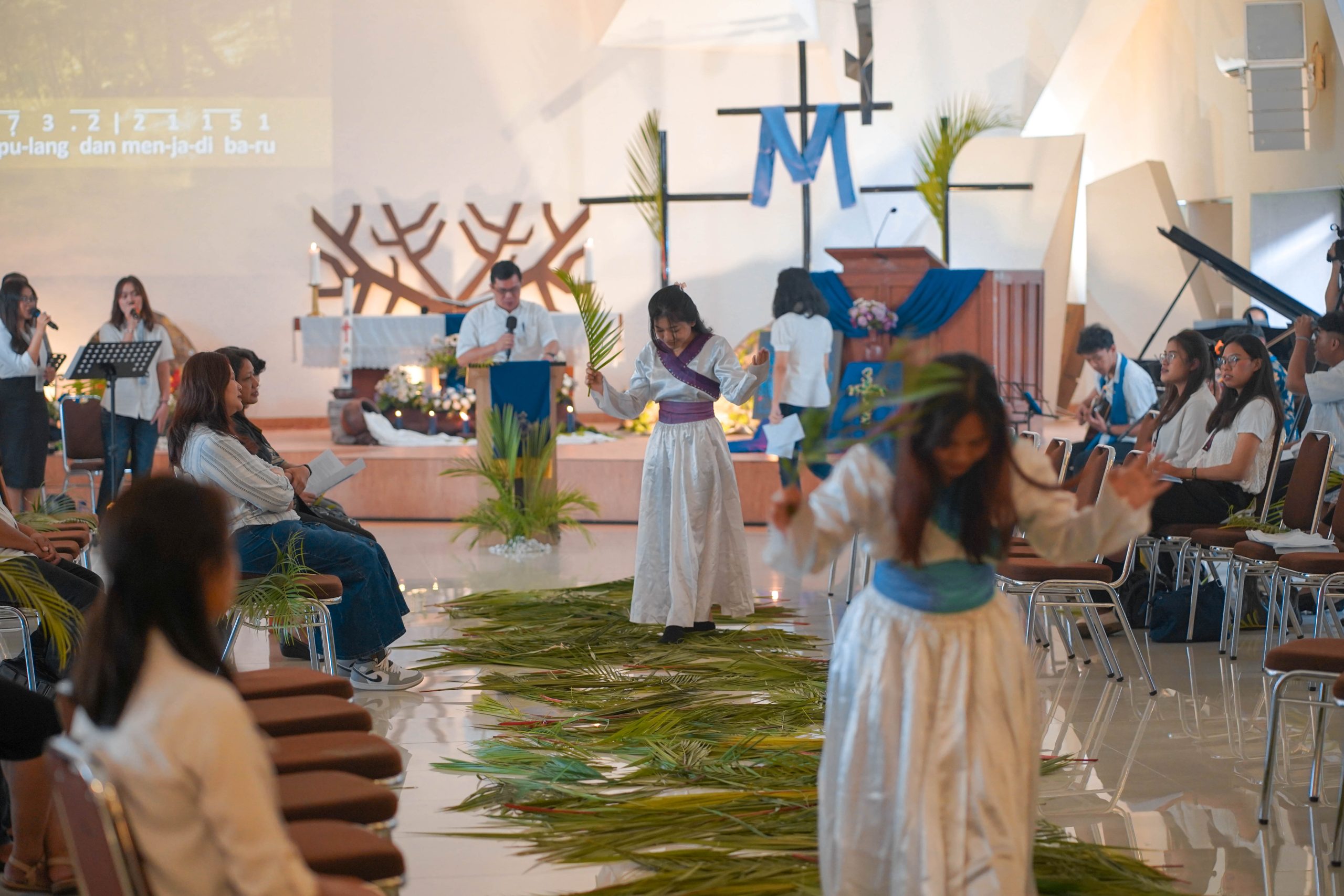
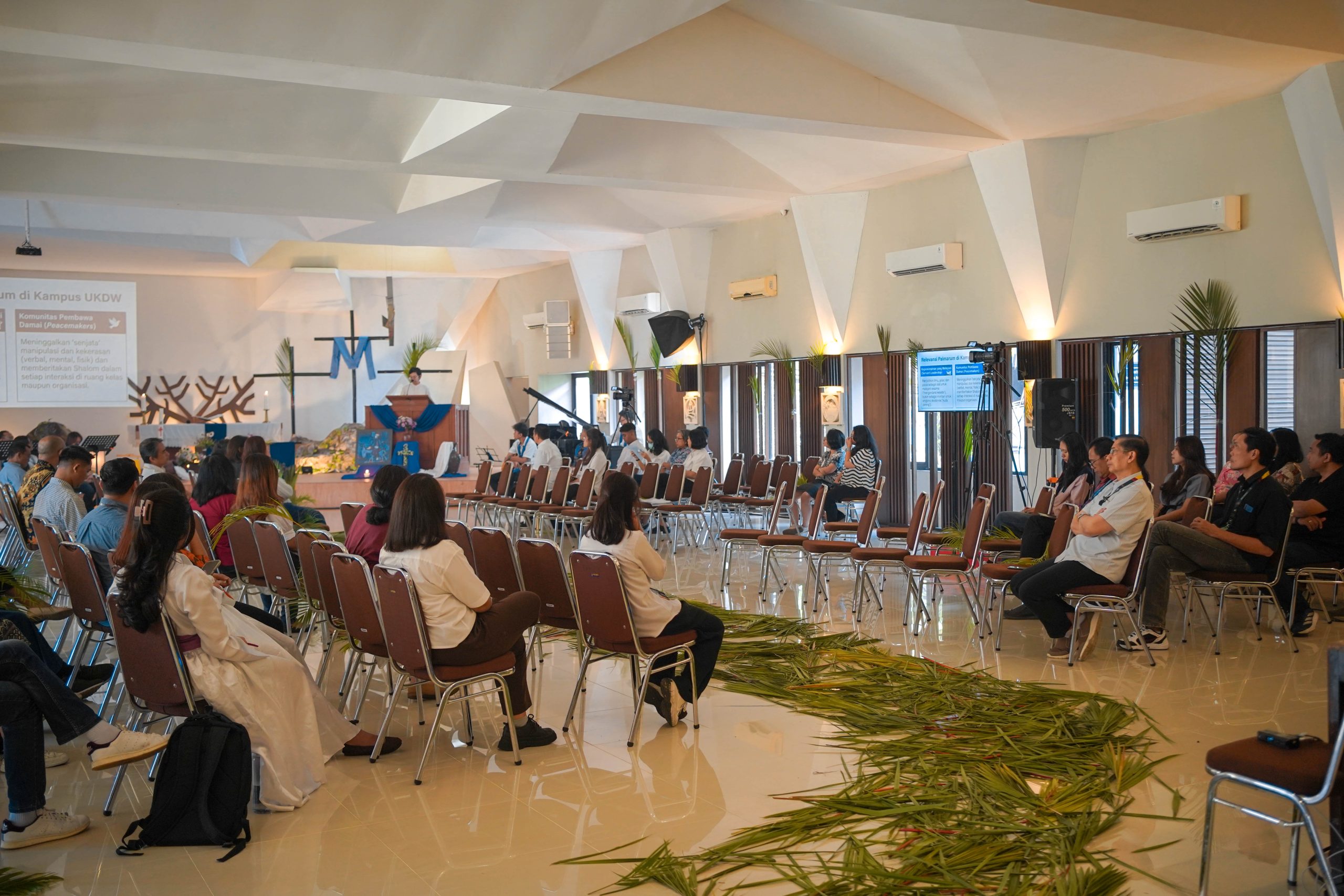
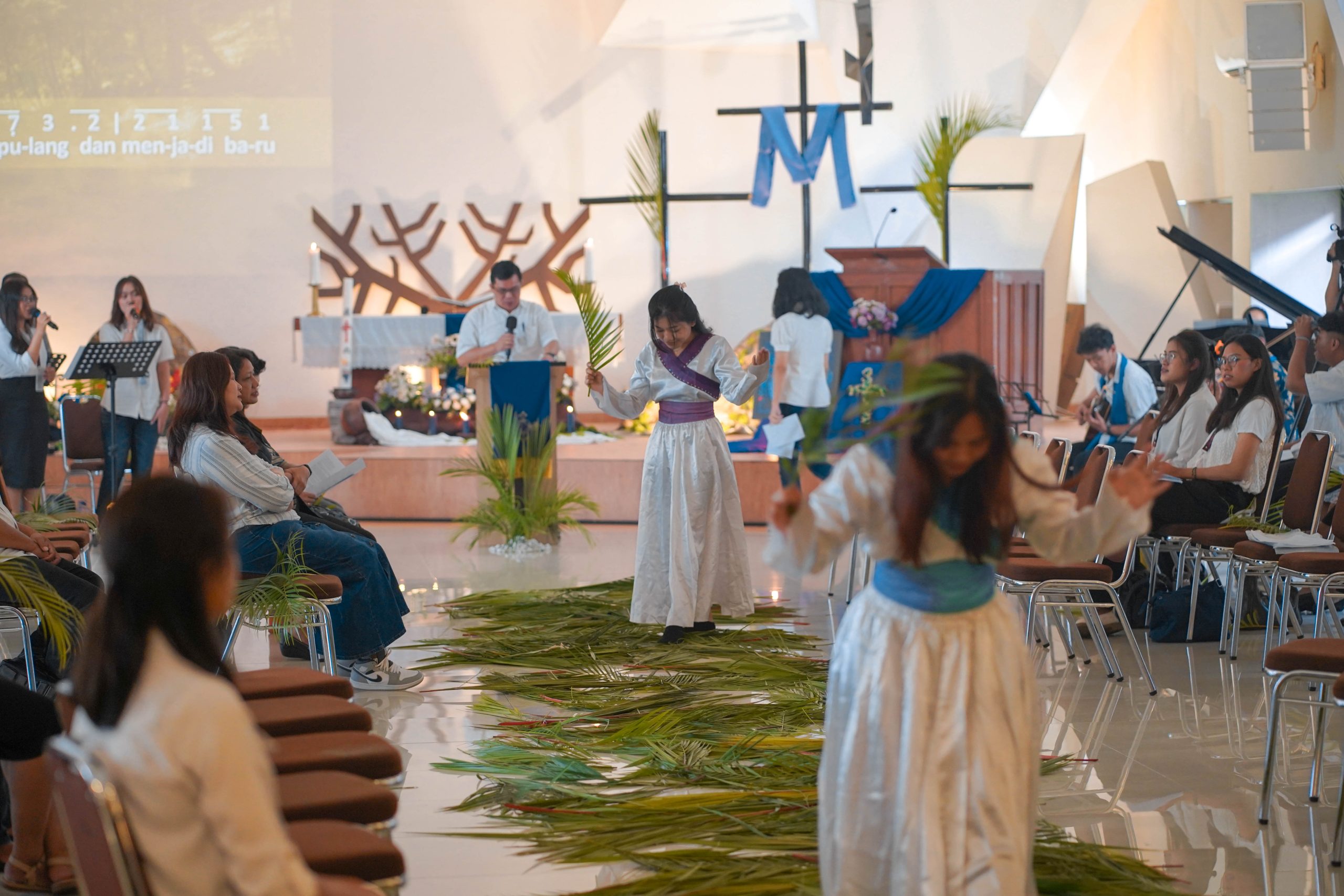
Universitas Kristen Duta Wacana (UKDW) held a Morning Prayer service on Monday, March 30, 2026, at the university chapel, carrying the theme “Palm Sunday: The Humble King.” The service featured a sermon by Ignatius Tri Endarto, M.A., Head of the English Language Education Program, based on Zechariah 9:9–10—a prophetic passage that offers a strikingly different vision of the long-awaited king.
In his reflection, Endarto spoke to the current situation faced by the UKDW academic community as it approaches the midterm examination period. He acknowledged that feelings of nervousness and anxiety are natural, but should not undermine one’s motivation. “As we enter midterms, it’s normal to feel anxious and unsettled. But when we give our best and continue to trust in God, we can face each challenge with confidence,” he said, encouraging students and faculty alike to remain steady and focused.
Endarto went on to explain the historical context of the Book of Zechariah. Written in the 6th century BCE, the text reflects a period when the people of Israel had returned from exile in Babylon but were still not fully independent, living under the rule of major empires such as Persia and later Greece. In such circumstances, many longed for a Messiah who would bring political liberation.
Yet the prophecy in Zechariah presents a different kind of king. Rather than a military conqueror, the promised ruler is described as humble. “This prophecy reshapes our understanding of kingship. The king comes not as a conqueror, but as one who is righteous, brings salvation, and embodies humility,” Endarto explained. He noted that righteousness here goes beyond personal piety, pointing instead to active efforts to restore justice for the oppressed and uphold God’s law. True victory, he added, is not defined by worldly power, but by the salvation that comes from God.
He also highlighted the symbolism of the donkey as the king’s mount. Unlike a war horse, which signifies military strength, the donkey represents peace and simplicity. “When the king rides in on a donkey, it signals that he comes as a bearer of peace, not as a leader who relies on violence,” he said. According to Endarto, this prophecy finds its fulfillment in Jesus Christ, who brings reconciliation and peace to the world.
Within the campus context, the message of Palm Sunday remains highly relevant for the entire UKDW community. Endarto encouraged individuals to practice servant leadership, following the example of Jesus, who humbly washed His disciples’ feet. He stressed that knowledge, academic titles, and positions should be used as instruments of service—not as markers of superiority. “What we have on this campus should be used to serve others, not to foster academic arrogance,” he emphasized.
He also underscored the importance of building a community rooted in peace. This involves rejecting all forms of harm—whether verbal, psychological, or manipulative—and replacing them with mutual respect. In doing so, every interaction, whether in classrooms or student organizations, can become an opportunity to cultivate peace.
In closing, Endarto invited the congregation to welcome the King not only in words, but through daily actions. “Let us welcome the King not only with shouts of ‘Hosanna,’ but with hearts ready to carry the cross and live in humility,” he concluded. The service ended with a prayer that each individual would be empowered to serve others, set aside pride, and become agents of peace both within UKDW and in the wider community.
By MPK | Eng. by DRR