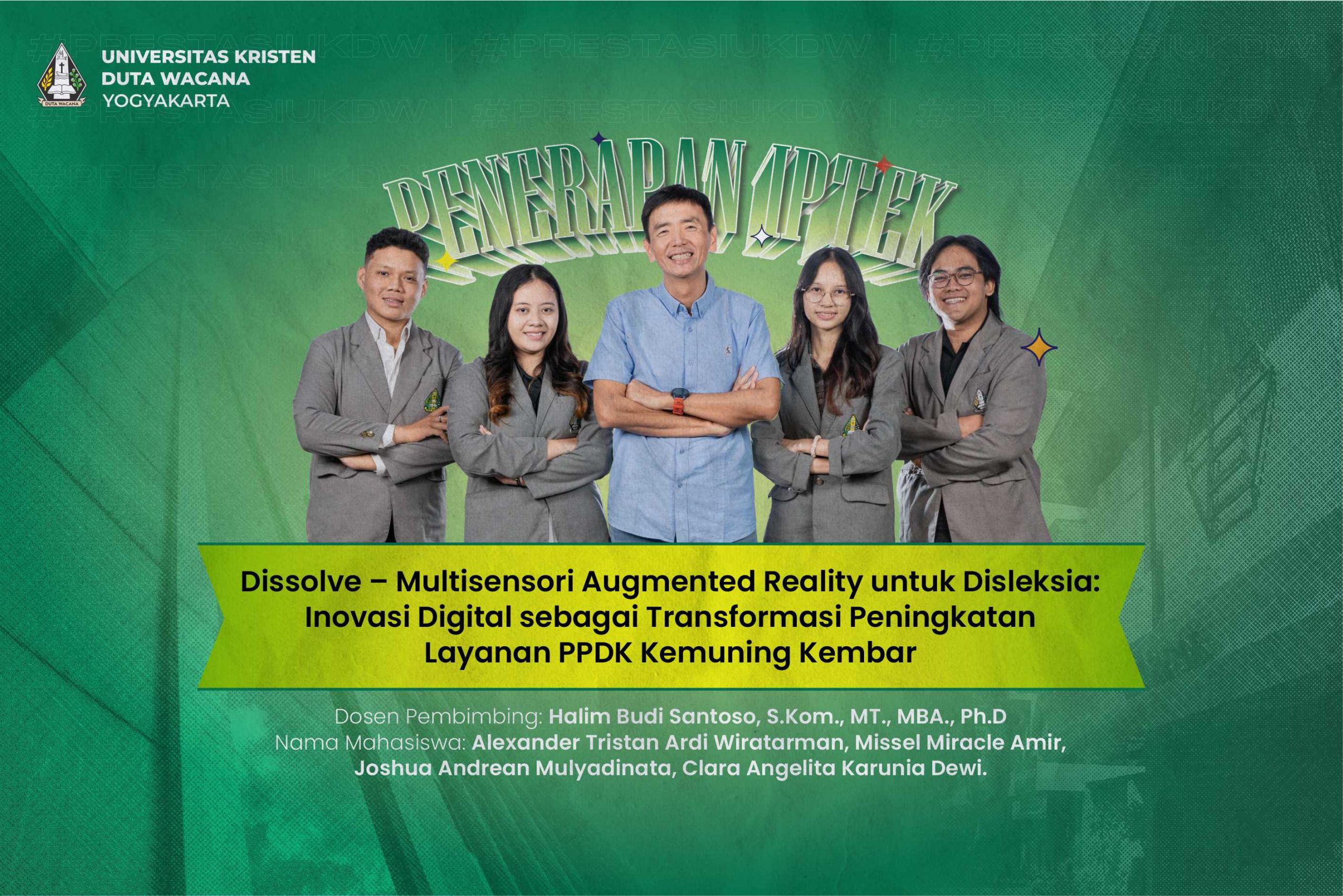
UKDW Students Develop “Dissolve,” an Augmented Reality Therapy Tool for Children with Dyslexia
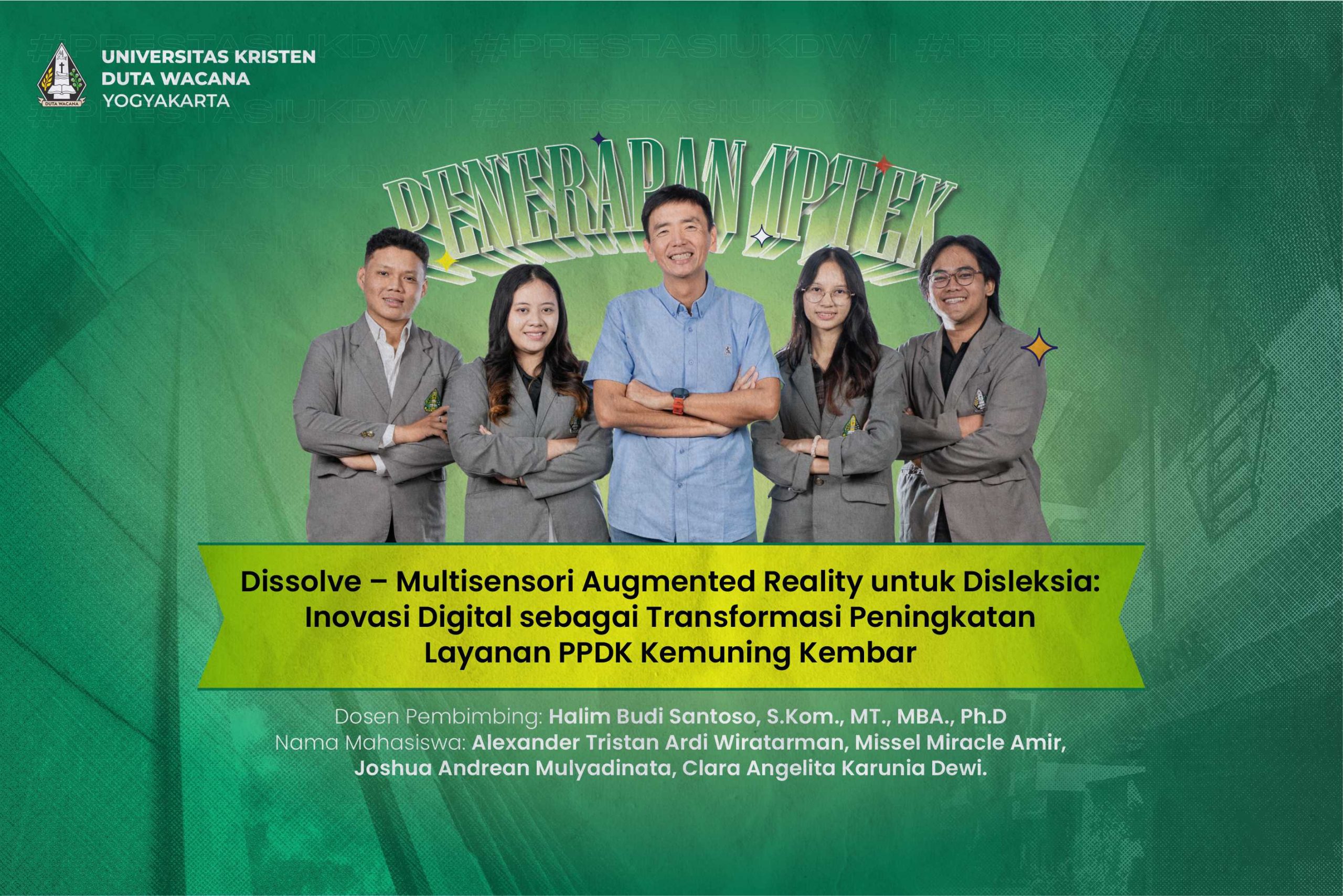 YOGYAKARTA — Improving access to psychological services for children with special needs—particularly those with dyslexia—has become a strategic priority in strengthening Indonesia’s education and mental health systems. Yet, most therapy tools currently used remain traditional, requiring direct supervision from therapists, limiting the possibility of home-based, independent therapy.
To address this gap, a team of students from the Information Systems Program at Universitas Kristen Duta Wacana (UKDW) Yogyakarta has developed Dissolve, a multisensory therapy tool powered by Augmented Reality (AR). Designed to support home-based therapy, Dissolve integrates a mobile application with Internet of Things (IoT) technologies to help children engage in effective, independent learning.
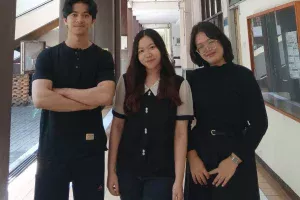
The team—comprising Alexander Tristan Ardi Wiratarman, Missel Miracle Amir, Joshua Andrean Mulyadinata, and Clara Angelita Karunia Dewi—collaborated with PPDK Kemuning Kembar Yogyakarta, a child therapy center specializing in multisensory treatments for dyslexia.
“Our innovation, Dissolve, is aimed at increasing therapy efficiency and reducing patient waiting times—without requiring additional psychologists,” said team leader Alexander Tristan. “It supports multisensory learning—visual, auditory, and tactile—while involving parents in the therapy process at home.”
Multisensory Learning Meets AR and IoT
Dissolve combines magnetic letter puzzles, a smart sensor board, and AR technology. Children arrange letters on the board, and the AR system detects the magnetic sequence, sending the data to a smart device. If the word is spelled correctly (e.g., “C-O-W”), the child sees a related animation and hears the word pronounced aloud. Additionally, a vibration motor provides tactile feedback, offering a playful and interactive learning experience that reinforces memory and engagement.
The system was developed using a Design Thinking approach—through the stages of Discover, Define, Develop, and Deliver—to ensure user-centric design tailored to the needs of children with dyslexia.
National Recognition and Educational Impact
Dissolve was awarded funding under the 2025 Student Creativity Program – Science and Technology Application Scheme (PKM-PI**)** by the Directorate of Learning and Student Affairs, Ministry of Education, Science, and Technology of the Republic of Indonesia.
“This program supports the achievement of Sustainable Development Goal 9 on industry, innovation, and infrastructure; aligns with ASTA CITA 4 on improving human resource quality through technology; and fits the PKM-PI Theme No. 6, which focuses on strengthening education, science, and technology,” added Alexander.
The team’s work was guided by faculty mentor Halim Budi Santoso, S.Kom., MBA., MT., Ph.D., who praised the students’ collaborative spirit and creative drive. “This PKM is a real-world example of synergy between academia and professional psychological services,” he said. “I’m proud of Tristan, Missel, Clara, and Joshua for their dedication and innovation. We hope Dissolve will truly benefit children with dyslexia across Indonesia.”
The team is now preparing for the next phase: implementation and user testing of Dissolve at PPDK Kemuning Kembar. They are also developing a scalable model for independent therapy services that could be adapted by other institutions nationwide. [humasukdw/tr.drr]