SETIA #2: Addressing Consumerism and the Church’s Role in Defining Well-Being
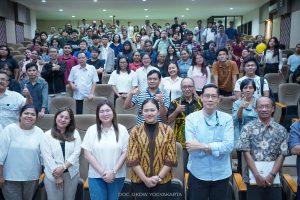
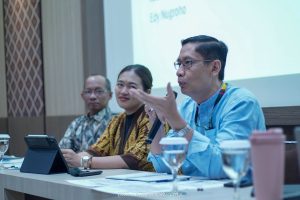
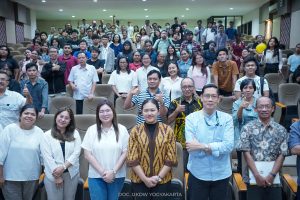
The Master of Divinity program at Universitas Kristen Duta Wacana (UKDW) Yogyakarta continued its Theological Seminar on Contemporary Issues (SETIA) with a second session held on Tuesday, May 13, 2025, at the Rev. Dr. Rudi Budiman Lecture Hall. The event, titled “Consumer Culture and the Church’s Role in Interpreting Well-Being,” brought together theologians and scholars to explore the impact of consumerism on spiritual life and community values.
The seminar featured three key speakers: Rev. Dr. Wahju Satrio Wibowo, M.Hum., Ph.D.; Edy Nugroho Widihantoro, M.Sc.; and Rosallina Christanti, SE., MAcc. They presented findings from field research conducted at three Javanese Christian Church (GKJ) congregations: Madukismo, Sedayu, and Pakem.
Rev. Wahju opened the session by reflecting on the parable of the rich man and Lazarus from Luke 16:19–31, which served as the theological foundation for their study. He examined how church members perceive life satisfaction and well-being, particularly in light of Christian teachings and values amid a consumer-driven society. He emphasized the increasing influence of consumerism within faith communities, cautioning against materialistic interpretations of success and prosperity.
In his theological reflection, Rev. Wahju discussed the biblical concept of blessing. In the Old Testament, blessings are not limited to material wealth but include peace, relational harmony, and connection with God. The New Testament perspective, he added, frames blessings within the context of salvation through Christ.
“True blessing is not always visible in material possessions,” he noted, “but also in life experiences such as peace, meaningful relationships, and a deeper connection with the Creator.”
The seminar also shared key survey findings on how congregants define well-being. The most valued aspects were family—especially children and spouses—followed by income. However, several crucial indicators were often overlooked: personal security, spirituality, and future planning were among the least considered, despite their long-term significance.
The speakers called for a continuous theological re-examination of the relationship between blessing and well-being to counterbalance consumerist values. They urged the Church to focus more on holistic human development, not only through clergy leadership but across the congregation. This includes implementing structured, forward-thinking education programs rather than relying solely on charity-based approaches.
The seminar concluded with a call for churches to invest more intentionally in people rather than physical assets or institutional branding, reaffirming the Church’s mission to nurture spiritually grounded and socially aware communities. [yunike/trans.drr]