
Rev. Prof. Asnath Niwa Natar Inastalled as UKDW’s Newest Full Professor of Theology
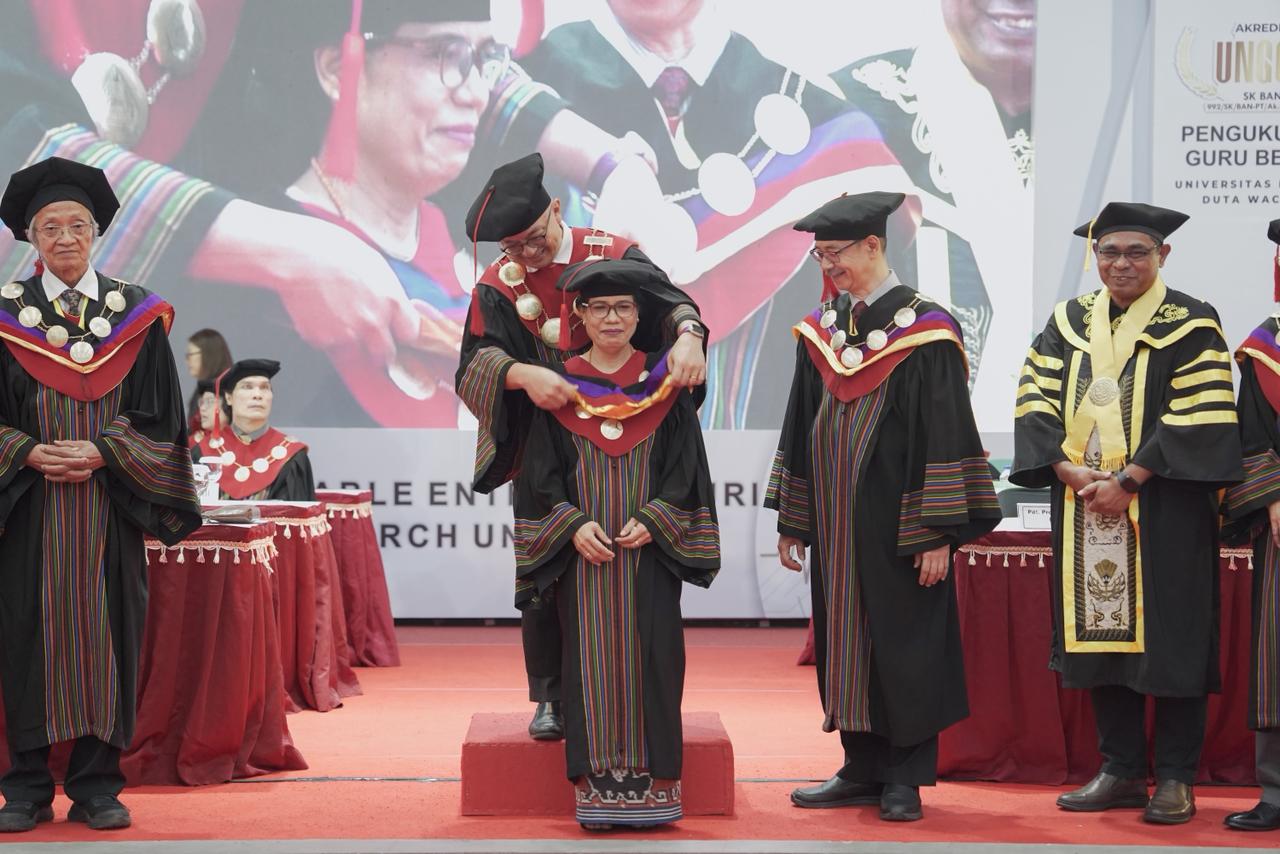
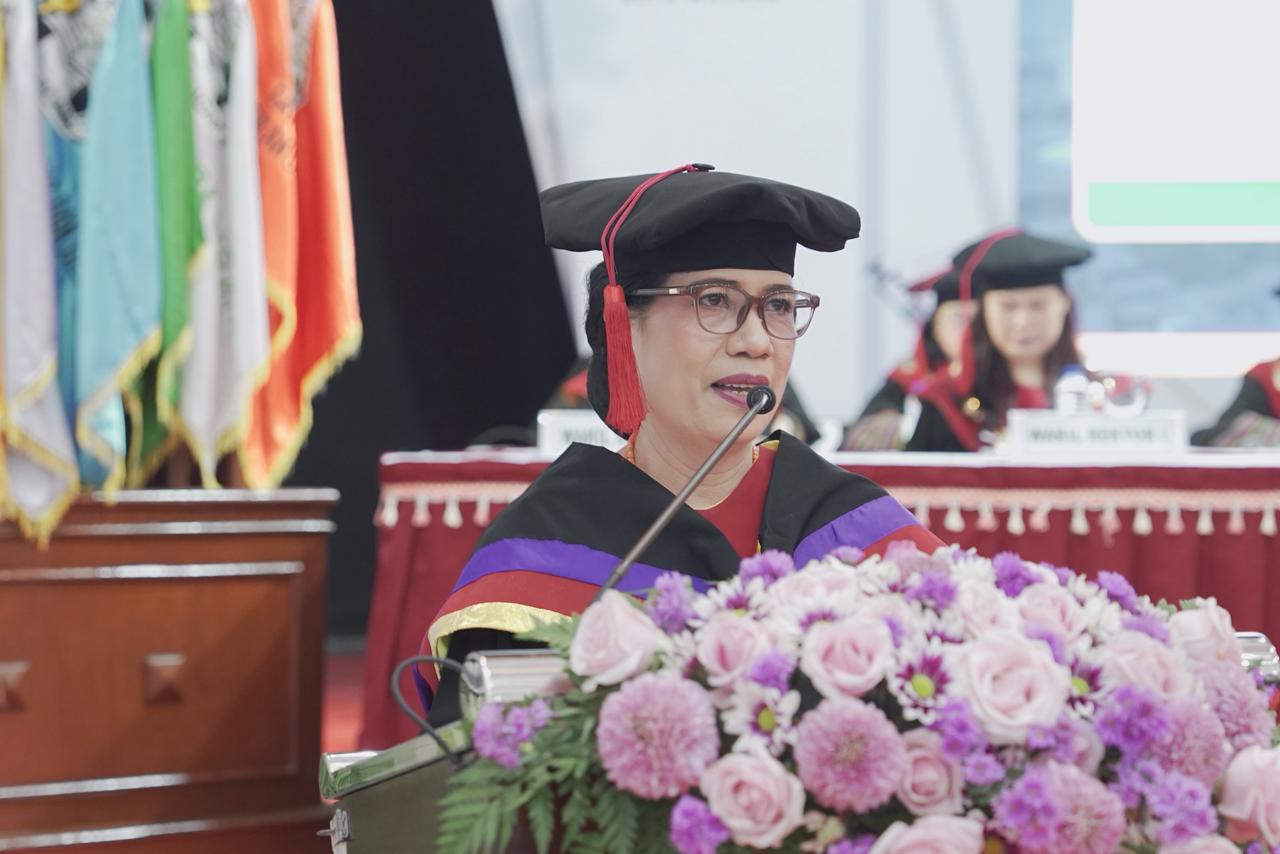
Rev. Prof. Dr. Asnath Niwa Natar, M.Th., a long-serving lecturer at UKDW’s Faculty of Theology, has been formally installed as a Full Professor of Theology, specializing in Pastoral Theology and Feminist Theology. The ceremony took place on Tuesday, December 2, 2025, at the UKDW Koinonia Auditorium, marking her appointment as the university’s seventh active full professor.
In her inaugural lecture, titled *“Reclaiming the Political Body, Authority, and the Theology of Women’s Bodies,”* Prof. Asnath stressed that women’s bodies have long been among the most vulnerable spaces within patriarchal societies. She explained that the historical shift from matrilineal kinship systems to patriarchal monogamous family structures positioned men as the central authority in matters of family and inheritance. This shift, she argued, not only reshaped social structures but also influenced cultural perceptions that women’s bodies can be regulated, controlled, and owned.
Prof. Asnath highlighted how cultural and customary legitimations often obscure various forms of gender-based violence. Practices such as forced marriage, *kawin tangkap*, domestic violence, and femicide are frequently regarded as traditions that must be upheld. Meanwhile, women are expected to remain patient and obedient, while violence committed by men is normalized as a sign of masculinity or a means of discipline.
She also underscored the role of certain religious institutions that prioritize the preservation of marriage over the safety of women’s bodies. Such conditions, she noted, strip women of their basic authority over their own bodies and lives. “When women have no power over their bodies, they lose the essence of their humanity,” she affirmed.
During her presentation, Prof. Asnath examined body politics as a framework for understanding how women’s bodies are constructed and politicized. Decisions women make about their bodies, she said, are not merely personal choices but political acts shaped by broader social structures. For this reason, women must reclaim authority over their bodies to restore their dignity, agency, and full humanity.
Beyond the social and political dimensions, Prof. Asnath emphasized the importance of a theological perspective. Through a theology of the body, she affirmed that men and women are created equal in the image of God, giving women’s bodies equal spiritual value that cannot be reduced to objects of ownership or control. Women’s bodily experiences—menstruation, pregnancy, childbirth, and breastfeeding—she noted, reflect God’s creative and nurturing love. This perspective challenges traditional views that label women’s bodies as impure or inferior and instead reveals their divine, life-giving, and compassionate dimensions.
In closing, Prof. Asnath called for a holistic discussion integrating body politics, bodily authority, and the theology of women’s bodies. Together, these perspectives are essential for understanding how women’s bodies have long been battlegrounds for patriarchal ideologies and for forging pathways toward the restoration of dignity and the liberation of women.
“Women’s bodies are not passive objects of culture or power. They are spaces of subjectivity endowed with value, rights, and the potential for liberation,” she concluded.
W-ID: mpk | Ed. (ENG): drr