UKDW Pushes Waste Awareness Movement as Part of Its Environmental Commitment
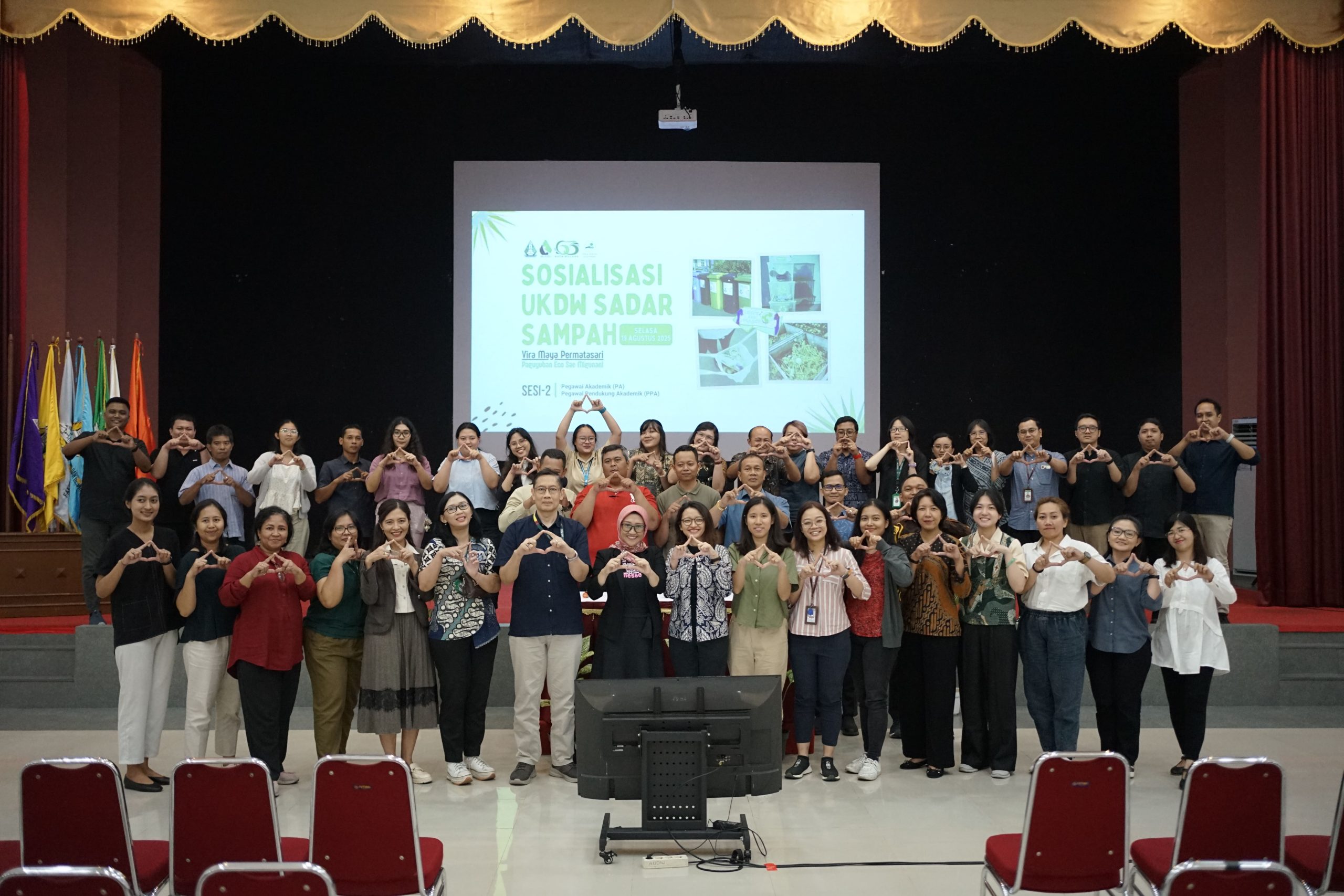
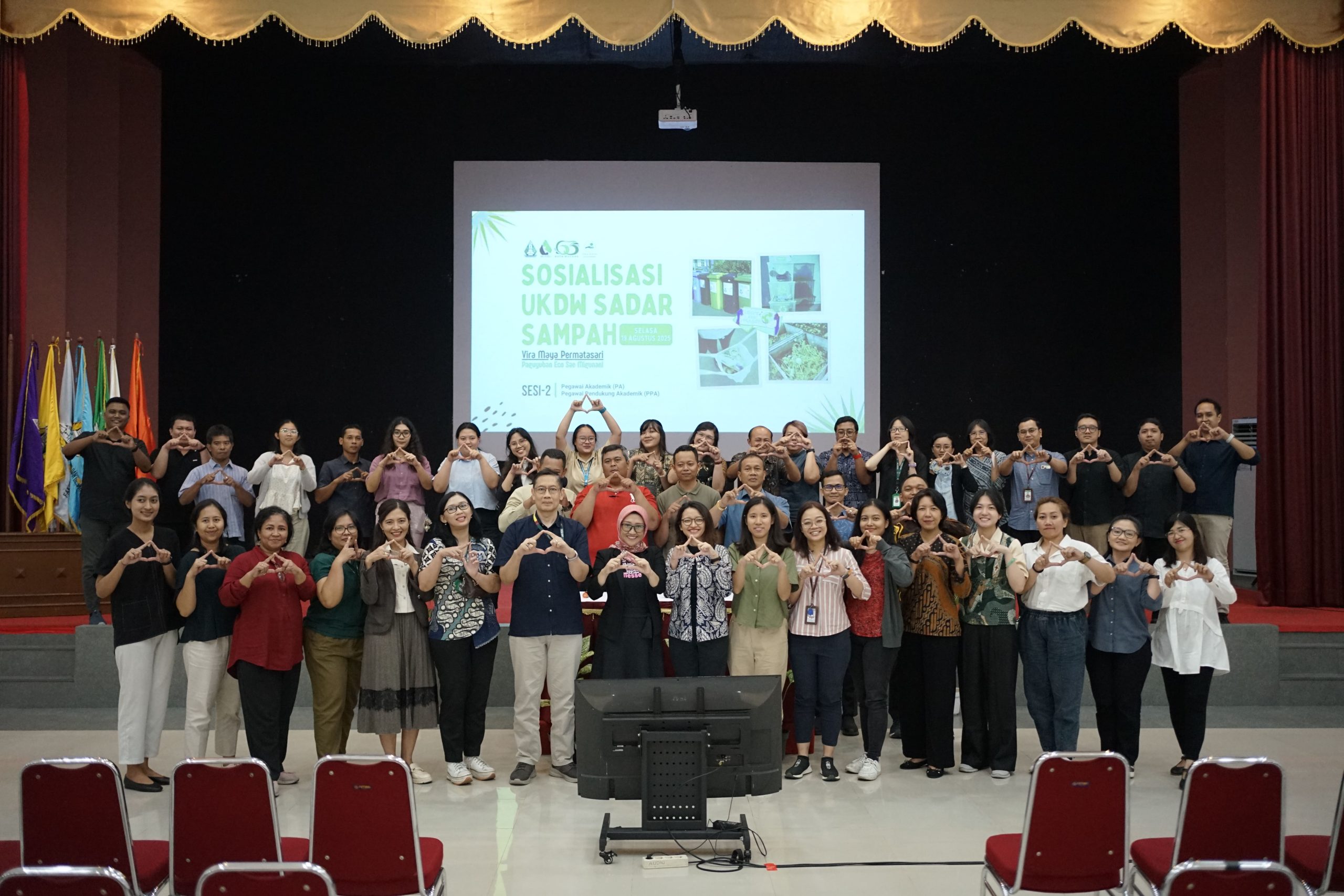
YOGYAKARTA – Universitas Kristen Duta Wacana (UKDW) has reaffirmed its commitment to environmental sustainability through the second phase of its Waste Awareness Movement, held on Tuesday, August 19, 2025, at the Koinonia Auditorium. The program, attended by lecturers and administrative staff, aims to instill an eco-conscious culture across campus life. The initiative underscores UKDW’s message that protecting the planet is not a passing trend but a shared responsibility—one that begins with small steps, such as responsible waste management.
In his opening remarks, UKDW’s Vice Rector for Human Resources Development, Promotion, and Networking, Rev. Wahju Satria Wibowo, Ph.D., stressed the importance of the “UKDW SERU” spirit, which champions sustainability. “Environmental damage caused by industries such as mining reminds us that we cannot continue exploiting nature without proper stewardship. As an educational institution, UKDW must not only survive and grow but also take part in addressing social issues, including waste management,” Wahju said.
Tackling Waste from Source to Disposal
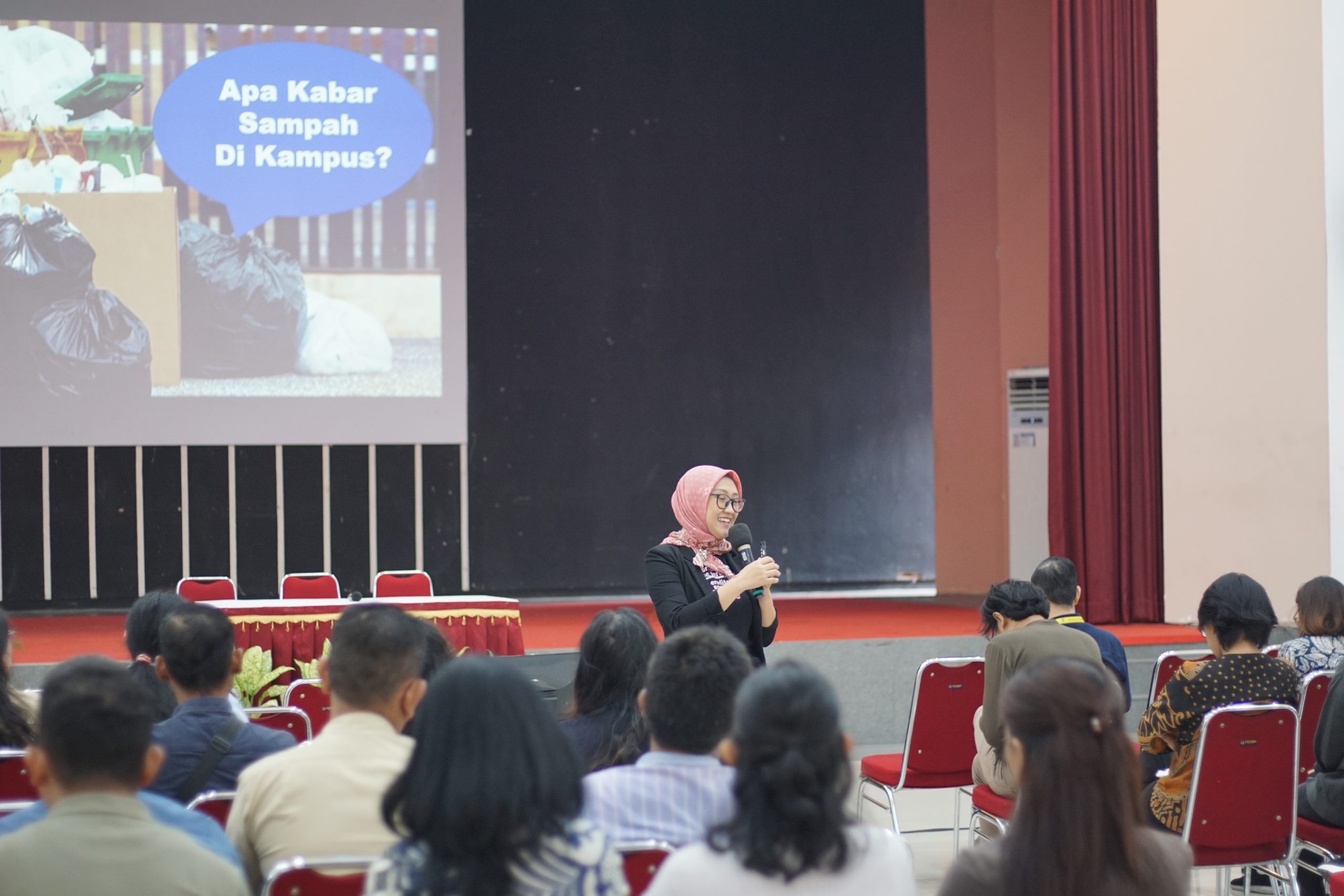
Guest speaker Vira Maya Permatasari from Paguyuban Eco Sae Migunani urged the university to take concrete measures in addressing waste challenges. She highlighted waste banks as a practical starting point that could deliver long-term impact if implemented consistently. “The key is to address waste at its source. The goal is not only to reduce the volume sent to landfills but also to shape new mindsets and behaviors that prioritize environmental care,” she explained.
Vira encouraged participants to adopt circular economy practices—turning waste into useful products, such as making soap from used cooking oil or crafts from non-organic waste.
She outlined three simple steps for better waste management:
- Prevent – Avoid single-use items by bringing personal containers and reusable bottles.
- Sort – Separate waste into organic, inorganic, and residual categories.
- Process – Repurpose waste into new, functional products.
As part of its commitment, UKDW has already introduced segregated trash bins and issued a policy to reduce single-use plastics on campus. Students and staff are encouraged to carry their own tumblers, use personal food containers, and minimize reliance on bottled water during campus events.
Silvanius Satno Nugraha, a staff member at the Faculty of Information Technology, noted that the faculty has implemented waste separation between organic and inorganic categories. However, he admitted that residual waste—non-recyclable items—remains a challenge.
Policy Support as a Key Driver
According to Vira, sustainable waste management depends not only on individual awareness but also on strong institutional support. This includes adequate infrastructure, ongoing education, and clear regulations that govern waste handling comprehensively.
“Well-managed waste not only reduces environmental harm but can also generate economic value. This is both an opportunity and a shared responsibility,” she concluded.
UKDW hopes the Waste Awareness Movement will grow beyond a one-off campaign and evolve into a lasting campus culture. Through consistent small actions, the university seeks to empower its academic community to act as agents of change for the planet.
By positioning the campus as a living laboratory for environmental innovation, UKDW aims to nurture future generations who excel not only academically but also in their responsibility toward sustainability.
W-ID: mpk | Ed. (ENG): drr