Church Response to Personal Struggles and Domestic Violence Under Scrutiny at UKDW Theology Semina
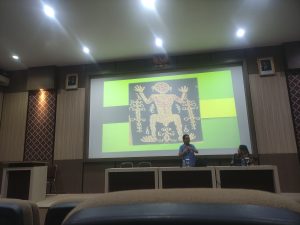
Throughout May, the Master of Divinity Program at the Faculty of Theology, Duta Wacana Christian University (UKDW) Yogyakarta is hosting its annual theological forum, SETIA (Seminar Teologi dan Isu-Isu Aktual or Theology and Current Issues Seminar). This series presents academic research by UKDW lecturers addressing pressing social realities and aims to foster contextual, responsive approaches to church practice and pastoral care.
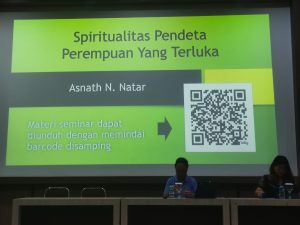
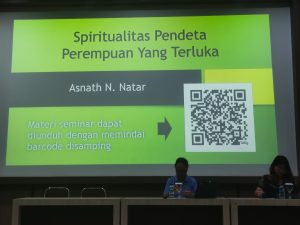
The first session, SETIA 1, took place on May 6, 2025, at the Rev. Dr. Rudi Budiman Lecture Hall. The featured speaker, Rev. Dr. Asnath Niwa Natar, M.Th., presented on the theme “Spirituality in a Wounded World.” She explored how human suffering—particularly emotional pain and trauma—can shape one’s spiritual journey. “Life’s hardships often cause inner wounds: emotional pain that lingers. Trauma, however, stems from shock—experiences that leave deeper, lasting scars,” she explained.
Rev. Dr. Asnath critically examined the role of the church, especially pastors, in responding to such trauma. She noted that traditional pastoral methods often involve quoting Scripture as a form of guidance, which, in some cases, may feel judgmental or inadequate to those in distress. “These spiritual approaches can unintentionally retraumatize individuals if not grounded in empathy and context,” she said.
She introduced the concept of the “living human document,” emphasizing that each person’s life experience is unique and should be approached individually. “A single problem will not affect two people the same way—each case must be understood on its own terms,” she asserted.
Rev. Dr. Asnath also presented findings from her recent study, “The Spirituality of Wounded Female Pastors,” which sheds light on domestic violence (KDRT) experienced by women clergy. “Being a pastor does not make one immune to domestic abuse,” she stated. Victims reported not only physical harm but also emotional and psychological trauma, social stigma, and ecclesiastical discipline.
She highlighted the dilemma faced by female pastors who suffer in silence due to rigid church doctrines and cultural expectations. “Church teachings often prohibit divorce, and pastors who separate from their abusive partners face significant social punishment within their congregations,” she said. In a recent survey conducted among church members, most respondents expressed sympathy for the victims but also upheld traditional doctrines, revealing a complex tension between pastoral care and church orthodoxy.
Rev. Dr. Asnath emphasized that Scripture should not be used uncritically to resolve sensitive issues like domestic violence. “We cannot apply sacred texts without carefully considering the context,” she warned. Decisions must be guided not only by religious principles but also by ethical reasoning and a deep understanding of human suffering. [jonathan/trans.drr]